Large appliance removal covers heavy home machines such as refrigerators, washers, dryers, stoves, and dishwashers. These items can have wiring, plumbing, gas, glass, or refrigerant. Medina Junk Removal helps property owners prepare, remove, and send unwanted appliances to reuse, recycling, or proper disposal.
Table of Contents
- What Is Considered a Large Appliance for Removal?
- Which Appliances Can a Junk Removal Service Pick Up?
- How Should You Prepare a Large Appliance for Removal?
- How Are Large Appliances Disposed Of or Recycled?
- Are There Special Disposal Rules for Refrigerators and Freezers?
- What Affects Large Appliance Removal Planning?
- When Should You Hire Professional Large Appliance Removal?
- Frequently Asked Questions
- Conclusion
What Is Considered a Large Appliance for Removal?
A large appliance is a heavy machine that is hard to move by hand. Most need two or more people, moving tools, or careful planning. Many also contain metal, glass, wires, insulation, oil, or refrigerant.
Refrigerators, Freezers, and Other Cooling Appliances
Refrigerators, freezers, ice makers, and similar cooling units are large appliances. They have compressors and sealed cooling systems. Some older units may contain refrigerants that need careful recovery before recycling or disposal.
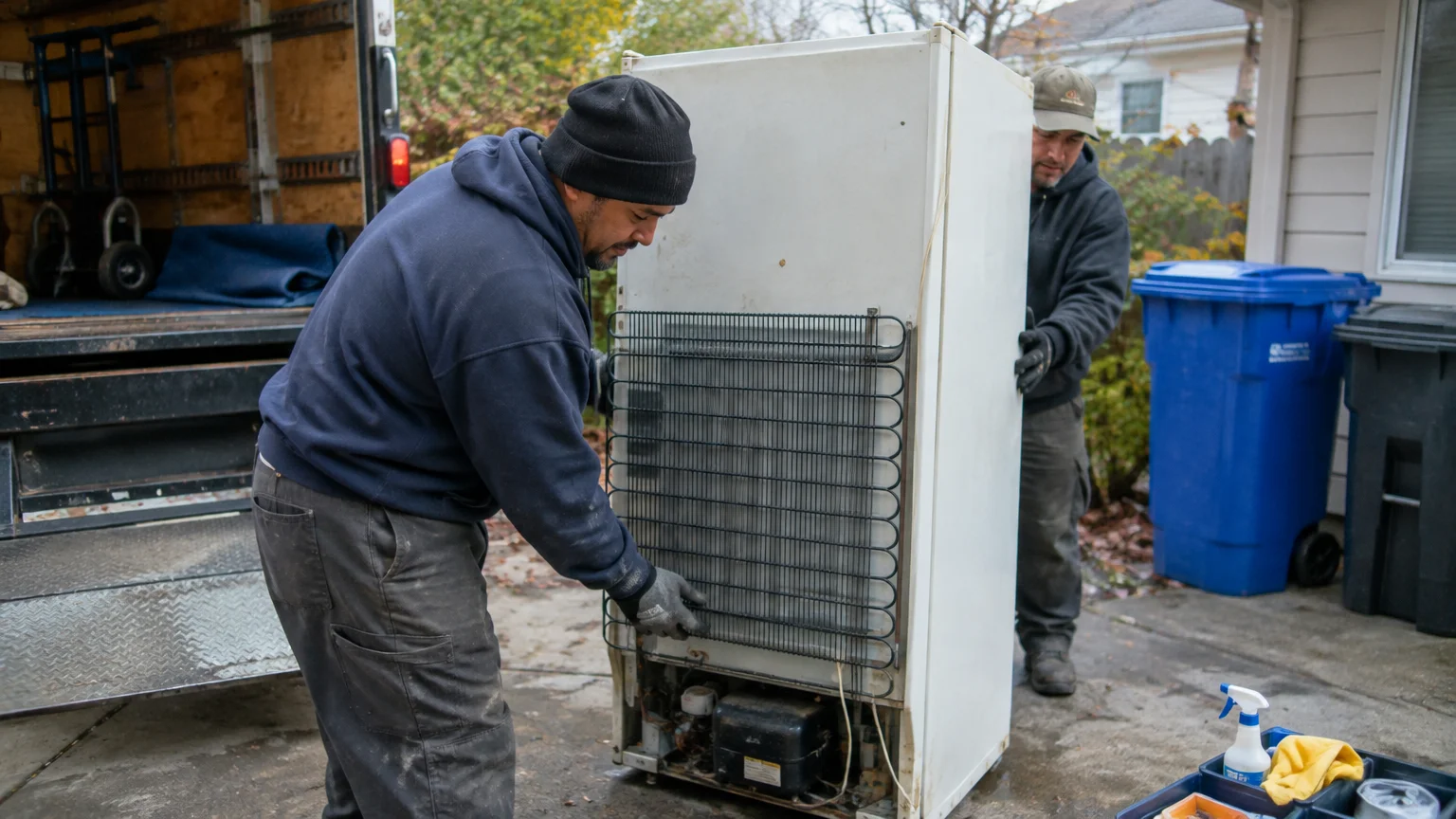
A refrigerator can be hard to move because it is tall, deep, and heavy. Keep the doors closed while moving it. Remove shelves, drawers, and loose parts first. This helps protect the floor, walls, and appliance from damage.
Freezers also count as large appliances, even when they are smaller. Chest freezers can be hard to carry through narrow doors. Never cut cooling lines, remove compressors, or release gas. Trained workers and approved facilities should handle those jobs.
Washers, Dryers, Stoves, and Dishwashers
Washers, dryers, ranges, ovens, and dishwashers are also large appliances. Washers may hold water and have heavy parts inside. Dryers may connect to electricity or gas. Stoves and ovens can have glass, wires, heating parts, and gas lines.
Dishwashers often sit under a counter. They may need water, drain, and electrical connections removed before they come out. A built-in appliance can take more planning than a freestanding one.
Other items may qualify, too. These can include trash compactors, large dehumidifiers, commercial-style cooking units, and some window air conditioners. A removal team can review the item and explain what preparation it needs.
Which Appliances Can a Junk Removal Service Pick Up?
A junk removal service can often pick up common household appliances. Acceptance depends on the item, its condition, its location, and local rules. Describe the appliance clearly when arranging service.
Common Household Appliances Accepted for Removal
Common pickup items include refrigerators, freezers, washers, dryers, stoves, ovens, ranges, and dishwashers. Some services also accept microwaves, compact refrigerators, water heaters, and dehumidifiers. Large appliance removal may cover one item or several appliances from one property.
The appliance does not always need to work. Old, broken, stained, or outdated units may still contain useful metal and parts. A team may sort these materials before sending the rest to the right facility.
Homeowners, landlords, businesses, and property managers may all need this service. A rental turnover may leave a broken washer. A kitchen update may leave an old stove. An office, restaurant, or apartment building may have larger equipment that needs review.
Oversized, Built-In, and Commercial-Style Appliances
Oversized and built-in appliances often need extra planning. A commercial-style refrigerator may be wider and heavier than a home model. A built-in oven may be fixed inside cabinets. A stacked washer and dryer may need to be separated first.
Mention stairs, tight halls, gates, elevators, and low doors. These details help the service plan safe movement. Photos can also help when an item is large or hard to reach.
Some appliances need special handling or may not be accepted by every provider. This may include units with damaged cooling lines, unknown chemicals, severe dirt, or unsafe gas connections. A good service explains these limits before the visit.
How Should You Prepare a Large Appliance for Removal?
Preparation makes large appliance removal safer and easier. Remove food, clothing, dishes, water, shelves, and loose parts. A qualified person should handle gas, hardwired power, or plumbing connections.
Disconnecting Utilities and Emptying the Appliance
Unplug a simple appliance only when the plug is easy to reach. Do not pull the cord, cut wires, or open a gas line. A licensed worker may need to disconnect gas appliances or hardwired units.
Empty refrigerators and freezers fully. Let wet appliances drain before moving them. Remove detergent, trays, racks, shelves, and other loose items. Clean spills so the path does not become slippery.
Secure a refrigerator door during movement. Do not seal it shut for long storage. If the unit stays in place after cleaning, the door may remain slightly open. The removal team can explain safe short-term steps.
Checking Access, Measurements, and Property Protection
Measure the appliance and compare it with doors, halls, stairways, and gates. Check for sharp turns and low ceilings. Clear rugs, toys, boxes, and other trip hazards from the path.
Protect floors and walls when needed. A removal team may use blankets, straps, dollies, ramps, and other tools. Keep children and pets away from the work area during movement.
Do not drag a heavy appliance across the floor. Do not tip a refrigerator carelessly or carry a washer downstairs alone. Cleaning and clearing a path are safe do-it-yourself tasks. Utility work and heavy lifting may need professional help.
How Are Large Appliances Disposed Of or Recycled?
Large appliances are sorted by their materials and condition. Working items may go to donation or reuse groups. Broken units may go to an appliance recycler, metal processor, transfer station, or another approved facility.
Appliance Recycling and Material Recovery
Appliance recycling means taking apart an old machine so useful materials can be recovered. Steel, aluminum, copper, glass, plastic, and wiring may be used again. Motors and other parts may also be separated when safe.
Cooling appliances need extra care because their sealed systems may contain refrigerant and oil. A qualified facility can recover these materials before the metal is processed. Never puncture a cooling line or remove a compressor without proper training.
Recycling routes differ across the United States. Local rules may depend on the city, county, state, appliance type, and facility. Medina Junk Removal can help Medina property owners understand the next step for common household units.
Donation, Reuse, and Responsible Disposal Options
An appliance in good working order may be ready for reuse. Donation groups, reuse centers, appliance stores, or community programs may accept some items. Acceptance often depends on age, condition, safety, cleanliness, and transport needs.
Broken appliances usually need another route. A removal service may sort them before delivery to a recycling or disposal facility. This keeps bulky machines away from places that cannot safely accept them.
Do not leave appliances beside a road, in an empty lot, or near a dumpster without checking local rules. Illegal dumping can harm property and create safety risks. Responsible removal sends the item to a suitable destination.
Are There Special Disposal Rules for Refrigerators and Freezers?
Yes. Refrigerators and freezers need special handling because their cooling systems may contain refrigerant. Keep the system sealed until a trained worker or approved facility handles it. Do not release refrigerant into the air or place a full cooling unit in ordinary trash.
Refrigerants, Compressors, and Environmental Requirements
Refrigerant is a chemical that moves heat through a cooling system. It travels through sealed lines, a compressor, and other parts. Older and newer units may use different refrigerants, so the model label may matter.
The U.S. Environmental Protection Agency explains refrigerant recovery requirements for technicians and businesses that service or dispose of covered equipment. Local facilities may also have their own acceptance rules.
A homeowner can empty and clean the unit. Do not cut lines, remove the compressor, or drain oil. If the unit leaks, keep people away and tell the removal service before the appointment.
Why Refrigerators Need Different Handling
A refrigerator is more than a large metal cabinet. It may contain refrigerant, insulation, wiring, glass shelves, plastic parts, and a compressor. Safe removal protects workers, the property, and the environment.
Freezers may have the same concerns. A chest freezer can be hard to lift because its weight sits low and its shape is wide. A service may need a clear path and special moving tools.
Tell the provider whether the appliance has its cooling system, whether it is damaged, and whether it was exposed to chemicals or flooding. Clear details help the provider choose a safe disposal route.
What Affects Large Appliance Removal Planning?
Removal planning depends on the appliance, the property, and the disposal route. Share the number of items, their size, their condition, and their location. Final service details are confirmed after the provider reviews the job.
Number, Size, Weight, and Type of Appliance
One small dishwasher is easier to plan than several full-size appliances. A wide refrigerator, stacked laundry unit, or commercial range may need more workers and tools. A damaged appliance may also need careful handling because of sharp edges or loose parts.
The item type affects the next step. Refrigerators and freezers may need refrigerant handling. Gas ranges may need safe utility disconnection. Washers may contain leftover water. Dishwashers may remain attached to plumbing or cabinets.
Help the service by sharing clear descriptions and photos. Explain whether the appliance is inside, outside, upstairs, in a garage, or behind a gate. This helps the team plan without guessing.
Access, Labor, Transportation, and Disposal Requirements
Access is a major part of removal planning. Stairs, narrow doors, long walks, uneven ground, and elevators can change how the item moves. Property protection also matters when the path crosses finished rooms.
Transportation and disposal needs depend on the appliance. Some facilities accept mixed metal. Others require cooling units, gas appliances, or electronic parts to arrive separately. A responsible provider checks the route before leaving the property.
Large appliances need more care than small curbside items. They may need more handling and special disposal. The provider confirms the final service details after reviewing the job. Ask what preparation is needed and which items the service accepts.
When Should You Hire Professional Large Appliance Removal?
A professional is a good choice when an appliance is heavy, awkward, connected, or hard to reach. Homeowners do not need a professional for simple cleaning, emptying, or clearing a safe path. Get help when moving the item could cause injury or damage.
Signs a Pickup Is Safer Than DIY Removal
Professional help is often safer when:
- The appliance must travel down stairs or through a tight doorway.
- The item is too heavy for the people available to move it safely.
- The unit connects to gas, plumbing, or hardwired electricity.
- The refrigerator or freezer may still contain refrigerant.
- The appliance has sharp damage, broken glass, or unstable parts.
- The owner lacks a dolly, straps, ramp, or moving blankets.
Never risk a back injury to move an unwanted appliance. Do not cut pipes, wires, or cooling lines. Simple preparation is helpful, but unsafe disconnection and lifting should be left to qualified workers.
What to Expect From a Responsible Removal Service
A responsible service asks useful questions before pickup. It confirms the appliance type, location, access route, condition, and utility status. It also explains which items may need another provider or facility.
The team should protect the property while moving the appliance. It should avoid dumping and follow suitable recycling or disposal routes. The owner should receive clear instructions about preparation and next steps.
Medina Junk Removal helps property owners sort through large appliance removal needs with a clear process. The team can review the appliance and explain the safest next step for the property.
Frequently Asked Questions
Can an old refrigerator go in a dumpster?
An old refrigerator should not go into a regular dumpster unless the dumpster provider and local facility allow it. Refrigerators may contain refrigerant and other parts that need special handling. A qualified appliance removal service can help send the unit to an approved recycling or disposal facility.
Who takes old freezers?
Junk removal companies, appliance recyclers, transfer stations, and some retailers may take old freezers. Rules vary by location and condition. Explain whether the freezer is empty, damaged, leaking, upstairs, or still connected before arranging pickup.
Can a homeowner remove a washer or dryer alone?
A homeowner may empty a washer or dryer and clear the path. Moving the unit alone is often unsafe because it is heavy and awkward. Gas dryers, hardwired units, stairs, and tight spaces call for qualified help and proper moving tools.
Are large appliances recycled after pickup?
Many large appliances go through reuse, recycling, or approved disposal channels. Metal, wiring, plastic, glass, and selected parts may be recovered. Refrigerators and freezers need added care because their cooling systems may contain refrigerant.
How should a dishwasher be prepared for removal?
Empty and clean the dishwasher, then remove dishes and loose parts. Water and electrical connections may need safe disconnection before removal. Since many dishwashers sit under counters, a qualified worker may need to handle plumbing, wiring, cabinets, or tight access.
Key Takeaways
- Large appliances include refrigerators, freezers, washers, dryers, stoves, ovens, and dishwashers.
- Owners can empty appliances and clear paths, but utility work may need qualified help.
- Refrigerators and freezers need special handling because they may contain refrigerant.
- Recycling, reuse, and disposal routes depend on the appliance and local facility rules.
- Careful planning protects people, floors, walls, and the environment.
Conclusion
Large appliance removal involves more than carrying a heavy machine outside. The appliance may have plumbing, gas, wiring, refrigerant, glass, or sharp metal. Preparation helps, but safe disconnection, lifting, transport, and disposal may need proper tools and experience.
For homeowners, landlords, businesses, and property managers, the first step is to identify the appliance. Then explain its condition and location. Medina Junk Removal serves Medina and can help plan a responsible next step for unwanted large appliances.
If you are unsure what you have, ask for help before the job becomes harder. Contact us today to discuss large appliance removal.